
Why maritime events are the best time to announce your news
How the right attention creates visibility
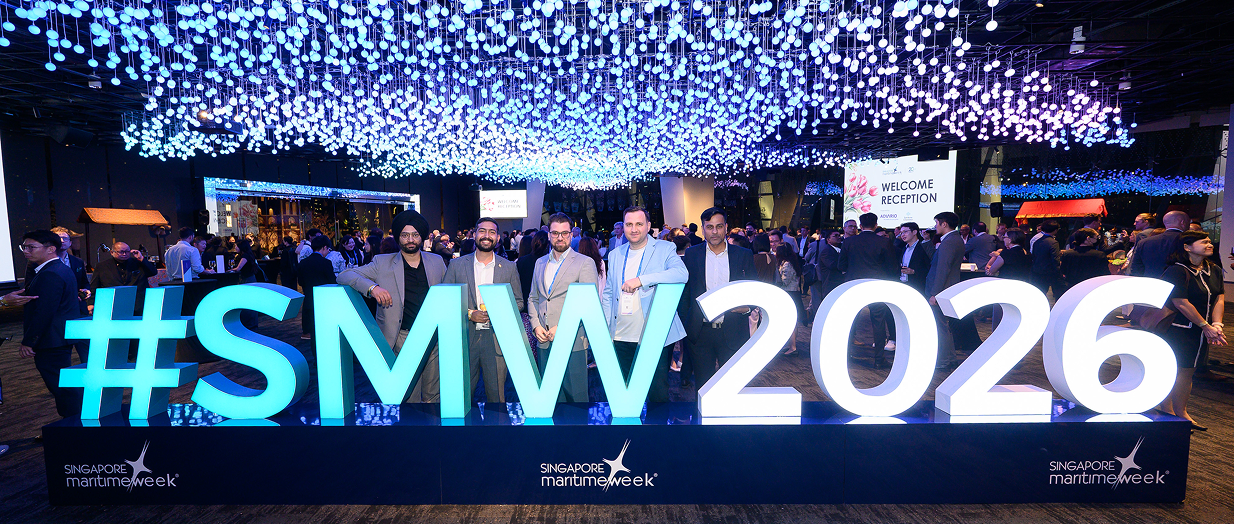
For decades, maritime trade fairs have been the places where business gets done. Shipowners, charterers, ports, (technology providers and suppliers travel across the world to strengthen relationships, discuss new opportunities and sign deals. Whether it is Posidonia in Athens, SMM Hamburg, Sea Asia in Singapore or Breakbulk Europe in Rotterdam, these events remain firmly embedded in the shipping industry’s calendar.
Yet something has changed. The conversations that start on the exhibition floor no longer stay there. A partnership announced in a meeting room quickly appears on LinkedIn. A vessel order becomes a headline in the maritime media. A new technology demonstrated at a stand finds its way into newsletters, search results and industry discussions around the world. Your audience has grown far beyond the people physically attending the event. That shift is changing the role of maritime communications.
When the industry is watching
Most days, attention within the shipping industry is spread across thousands of companies and countless developments. New vessels enter service, sustainability projects move forward, and innovative technologies are launched, often without attracting much attention outside a company’s immediate network.
During major maritime events, the situation is very different. For a few days, the industry’s attention converges. Journalists are looking for stories, decision-makers are following developments and LinkedIn feeds are filled with updates from exhibition halls, conference stages and networking events. The maritime world becomes one large conversation. When that happens, timing starts to matter as much as the news itself.
A partnership announcement that may otherwise attract modest attention can suddenly reach a much larger audience. The same applies to a new office opening, a pilot project (or the results of it), an investment round or a vessel delivery. The story has not changed, but the number of people paying attention certainly has.
Maritime events create communication opportunities
This is one of the reasons why so many important announcements are linked to industry gatherings. Companies launching a new digital solution, unveiling a sustainability initiative or signing a strategic partnership often choose to communicate their news during events such as Nor-Shipping, Sea Asia or Singapore Maritime Week. The logic is straightforward.
Customers are paying attention. Journalists are actively searching for stories. Industry publications are increasing their coverage. Maritime professionals are consuming more news than usual because they want to know what is happening across the market. Good timing does not create a good story, but it can significantly increase its reach.
Trade fairs have become communication platforms
Traditionally, companies measured the success of an event by the number of meetings held, leads generated or business cards collected. Those metrics remain relevant, but they no longer tell the whole story.
Today, maritime events also function as communication platforms. They create moments when industry media are publishing more frequently, maritime professionals are actively consuming news and companies are eager to share developments with their networks. In many cases, the digital audience surrounding an event is significantly larger than the audience walking through the exhibition halls.
That is why some of the most successful announcements in shipping are deliberately timed around major industry events. Not because the event itself creates the news, but because it creates the attention.
Visibility extends beyond the exhibition hall
This is particularly relevant at a time when maritime PR is becoming increasingly digital. A well-timed press release can reach readers on every continent within hours. A customer success story can be shared across LinkedIn and picked up by industry publications. A company update can continue generating visibility long after the stands have been dismantled and the delegates have returned home.
The exhibition stand remains important, but it is no longer the only stage. Companies that understand this increasingly approach events with a communications plan alongside their sales plan. They think about which stories deserve attention, how those stories support their wider positioning and when they should be shared to maximise visibility.
In other words, they don’t just attend the event. They become part of the conversation surrounding it.
Start before the event starts
The most effective announcements rarely happen by chance. Long before the exhibition doors open, communications teams are already preparing press releases, identifying relevant maritime media and scheduling conversations with journalists. By the time the event starts, interviews have been arranged, story angles have been discussed and media contacts know what developments to look out for.
This preparation often makes the difference between publishing a press release and generating genuine industry coverage. Journalists attending major maritime events receive countless announcements during a single week. Reaching out before the event creates an opportunity to establish contact, introduce a story and potentially arrange a meeting while everyone is gathered in the same place.
At Marconic, we increasingly see maritime companies treating major industry events as communication milestones rather than standalone exhibitions. By preparing stories in advance, engaging with maritime media before the event and coordinating announcements around moments of peak industry attention, they can significantly extend the reach of their message. The event may last only a few days, but the visibility generated around it can continue for weeks or even months.
Visibility follows attention
The maritime industry will always be built on relationships. Face-to-face meetings remain invaluable and no digital channel can fully replace a conversation over coffee at a trade fair.
At the same time, the way people discover, consume and share information continues to evolve. Visibility is no longer determined solely by where you exhibit. It is increasingly influenced by what you communicate, where you communicate it and whether your audience is paying attention when you do.
That is precisely why maritime events have become such powerful moments for maritime communications. They bring together not only customers and partners, but also attention, relevance and reach. And when all three align, even a relatively small announcement can travel surprisingly far.
What’s next?
In the next article, I’ll explore the world’s most influential maritime events and explain how shipping companies can build a communications calendar around them to maximise visibility throughout the year.
Interested in my previous blog about how press releases can leverage your position within LLM’s such as ChatGPT, Perplexity and Claude? Read it here.
Let’s continue the conversation

Frans Swarttouw
frans@marconic.com
I believe maritime companies have a much bigger opportunity to strengthen their digital visibility than many realise today.
With Marconic, we help shipping companies, maritime suppliers and offshore businesses distribute press releases into the right maritime media ecosystem while building long-term digital authority and discoverability.
Curious how that works in practice?
Feel free to reach out.
