
Marconic: The spark behind your maritime communication
Meet Marconic. A name inspired by the marconist and rooted in the legacy of Guglielmo Marconi, inventor of wireless telegraphy. Marconi’s innovations transformed maritime communication and connected ships with shore long before satellite communication existed.
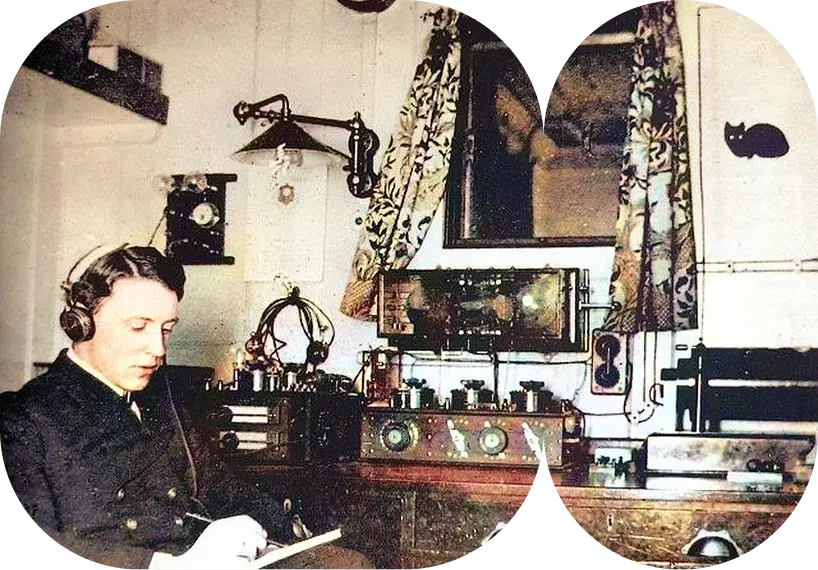
For almost a century, every serious vessel carried one man responsible for communication with the outside world: the marconist. Hidden somewhere between the bridge and the engine room, he listened to static, decoded Morse signals and maintained contact with shore while ships crossed the oceans.
The profession officially disappeared in 1999, but its legacy never did. Inspired by the marconists who connected ships across the globe, Marconic is built around one simple idea: strong maritime companies deserve strong communication and global reach.
From Morse code to maritime connection
At the end of the nineteenth century, Guglielmo Marconi changed communication forever. Using wireless telegraphy, he became the first to successfully transmit signals over long distances without physical cables. What started as experimental technology quickly transformed global shipping.
Ships were suddenly able to communicate with shore while at sea. Weather warnings could be transmitted. Emergency messages could be received. News from home could reach crews thousands of miles away.
Wireless communication became essential to maritime safety and international shipping. By the early twentieth century, vessels around the world were equipped with Marconi radio systems and operated by specially trained radio officers, known as marconists.
These men became known throughout the maritime world as ‘sparks’, a reference to the early spark transmitters they operated. A nickname that quietly captured the essence of the profession.
The men behind the signals
The marconist held a unique position on board. He transmitted telegrams, monitored emergency frequencies, received weather reports and maintained radio equipment during long voyages. On many ships, the marconist was the person bringing news, football scores and personal messages to sailors spending weeks or months at sea.
In emergencies, everybody depended on him. That became painfully clear during the sinking of the Titanic in 1912. The marconists on board continued transmitting distress signals until the final moments of the disaster. Their work helped nearby ships respond and ultimately saved hundreds of lives. The tragedy permanently changed maritime safety regulations and accelerated the global adoption of wireless communication at sea.
In the Netherlands, Radio Holland trained thousands of marconists during the twentieth century. They sailed on Dutch merchant vessels all over the world and became an essential part of maritime operations. At its peak in the early 1960s, hundreds of Dutch marconists were active at sea simultaneously.
Then technology changed. Satellite communication gradually replaced Morse code and radio telegraphy. The radio rooms disappeared. Scheveningen Radio closed its doors. And on 1 February 1999, the profession officially came to an end. The spark operators fell silent. Many continued their careers at sea as deck officers, electronic specialists or communication officers working with the new generation of satellite and navigation systems.
The legacy lives on
Although the profession disappeared, the principle behind it remains unchanged. Maritime companies still depend on communication. Visibility and connection still matter. The maritime industry moves globally, but many strong companies still struggle to communicate their story beyond their own network. Technical expertise alone is no longer enough.
Recognition, positioning and visibility have become part of doing business internationally. That is where Marconic comes in. Just like the marconist once connected ships with shore, Marconic helps maritime brands connect with the global maritime media landscape.
Our team works at the intersection of maritime expertise, strategic communication and storytelling. Through positioning, PR and content, we help maritime companies strengthen their visibility and reputation within the international industry. How do we do this? We do this through clear communication that travels.
Giving maritime brands a spark
Marconic is built on maritime heritage but focused on the future. The name is a tribute to the people who once connected the oceans through signals, discipline and technology. People who understood that communication was essential and not just a side issue.
Today, the tools are ever changing, but the need for communication and connection has always remained. From Morse code to media coverage. From Marconi to Marconic. Let us be your spark.
Let’s continue the conversation

Frans Swarttouw
frans@marconic.com
I believe maritime companies have a much bigger opportunity to strengthen their digital visibility than many realise today.
With Marconic, we help shipping companies, maritime suppliers and offshore businesses distribute press releases into the right maritime media ecosystem while building long-term digital authority and discoverability.
Curious how that works in practice?
Feel free to reach out.
